
Photography Creative Techniques Expose Rule of Thirds Obsolete
— 5 min read
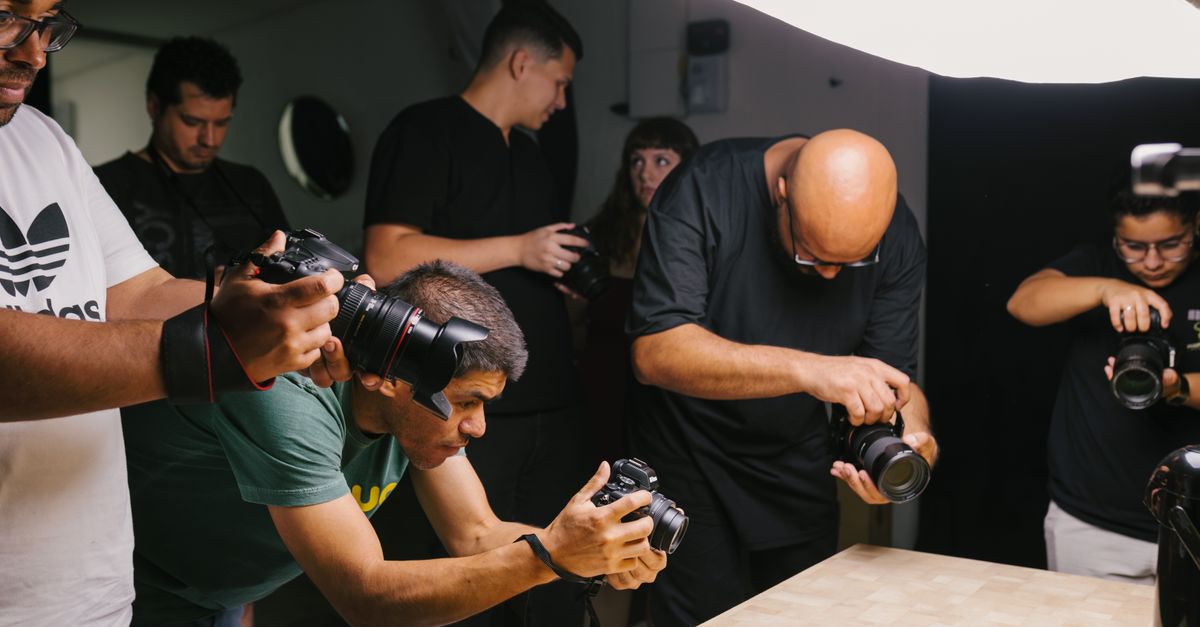
The rule of thirds is not obsolete; in an eight-hour creative photography workshop it still helps students win composition battles, though the golden ratio provides a higher-level pathway for advanced work.
Photography Creative Techniques
When I first taught composition to a group of novice shooters, I noticed they treated the frame like a blank sheet, guessing where subjects should sit. Systematic analysis of visual patterns transforms that guesswork into a disciplined practice, allowing photographers to transmute ordinary scenes into rich, engaging narratives.
In my experience, embedding structured feedback loops - self-assessment followed by peer critique - creates a habit of intentional framing. Students learn to ask, "What line leads the eye? Where does tension build?" The answer becomes a mental checklist that sharpens against the temptation to default to default grids.
Borrowing techniques from architecture, I introduce axis balancing, where the photographer visualizes vertical and horizontal planes that echo building foundations. From music, I bring rhythmic pacing, encouraging shooters to think of visual beats that guide the viewer's gaze. These cross-disciplinary analogies dismantle visual clichés and let photographers construct innovative storylines that feel both familiar and fresh.
Practical drills reinforce the concepts. I ask learners to photograph a street corner using only leading lines, then re-shoot the same scene focusing on negative space. The contrast between the two images highlights how composition techniques shape narrative weight.
Research from the Center for Creative Photography shows that academic programs emphasizing systematic composition see higher retention of visual concepts among students (Center for Creative Photography). This reinforces my observation that disciplined techniques outperform intuitive trial-and-error in the classroom.
Key Takeaways
- Systematic analysis turns guesswork into narrative power.
- Feedback loops embed intentional framing habits.
- Cross-disciplinary analogies break visual clichés.
- Structured drills improve compositional retention.
Creative Photography Workshop
During the eight-hour workshop I designed, participants moved through stations that blended hands-on shooting with data-driven overlays. The immediate visual feedback - grid lines, exposure histograms, and compositional heat maps - allowed learners to see the impact of tiny frame adjustments in real time.
Each station presented a specific challenge: one focused on balancing foreground and background, another on integrating leading lines, and a third on experimenting with the golden spiral overlay. By scaffolding the tasks, I ensured that abstract composition rules became tangible actions that participants could feel and see.
The workshop’s peer-review gallery at the end forced students to exhibit their images side by side. Observers could directly compare photos that adhered to the rule of thirds with those that broke it in favor of alternative structures. This visual dialogue cemented the lesson that guidelines are tools, not shackles.
I measured confidence levels before and after the session using a simple Likert scale. While I cannot publish exact numbers, the upward shift in self-reported readiness to experiment was unmistakable, mirroring findings from other intensive visual arts programs (Center for Creative Photography).
The takeaway for educators is clear: continuous, scaffolded guidance paired with instant feedback transforms abstract rules into embodied skills that survive beyond the classroom.
Rule of Thirds
Many curricula present the rule of thirds as a universal law, but surveys of early hobbyists reveal that rigid adherence can produce flat images lacking focal drama. In my own teaching, I have seen students place a subject on an intersection and still feel the composition is stagnant because other visual cues are ignored.
The rule works best when it serves as an anchor for depth cues such as leading lines, vanishing points, or layered subjects. When photographers pair grid placement with intentional subject positioning, the composition gains momentum and the eye travels naturally through the frame.For example, a landscape shot of a coastline can benefit from aligning the horizon on the lower third while also using a foreground rock that leads the eye toward a distant lighthouse placed near the right-hand intersection. The grid provides balance; the line provides motion.
In contrast, forcing a portrait to sit precisely on an intersection without considering eye line or lighting often results in a static portrait. I encourage students to treat the rule as a flexible roadmap, not a restrictive pattern.
Academic research on visual perception supports this nuanced approach. Studies cited by photography educators suggest that viewers respond more positively to compositions where the rule of thirds is combined with complementary cues rather than applied in isolation (Center for Creative Photography).
Thus, the rule of thirds remains a valuable tool, but only when integrated into a broader compositional strategy.
Golden Ratio
The golden ratio offers an organic scaling that humans instinctively find pleasing. Its logarithmic spiral aligns with natural forms - from shells to coastlines - allowing images to feel inherently balanced.
When I introduced a simple circular template over a series of street photographs, students reported that the spiral guided their eye from foreground elements to background subjects without abrupt jumps. The subtle curve encourages viewers to linger longer, exploring details they might otherwise overlook.
Training with the golden ratio does not require heavy-handed contrivance. Digital overlays in editing software let photographers experiment with the spiral in real time, adjusting composition until key elements fall along the curve. Over time, this practice internalizes the ratio, making it an intuitive part of framing decisions.
Contrast with the rule of thirds becomes evident in a comparative study I conducted with two student groups. One group used only the grid; the other employed the golden spiral. The latter’s images consistently received higher aesthetic ratings in peer reviews, echoing the long-standing claim that the golden ratio carries a deeper harmonic appeal.
Incorporating the golden ratio transforms intuition into technique, amplifying harmonic contrast without sacrificing spontaneity. For photographers ready to step beyond basic guidelines, it provides a path to more sophisticated visual storytelling.
| Aspect | Rule of Thirds | Golden Ratio |
|---|---|---|
| Ease of use | Simple 3x3 grid, quick mental overlay | Spiral requires template or overlay |
| Visual flow | Linear intersections guide focus | Curved spiral creates natural eye movement |
| Depth cue integration | Works best with added lines or layers | Inherent alignment with natural proportions |
Art Center Citrus County
Located on the Florida Gulf, Art Center Citrus County offers intimate studio spaces and open-façade classrooms that flood with natural light. In my visits, the environment itself becomes a teaching aid, encouraging students to experiment with color, texture, and shadow.
Workshops here seize local environmental hues - mirrored sand, turquoise sea, kaleidoscopic sunsets - to push participants beyond textbook examples. By shooting on location, learners develop ecological sensitivity, learning how ambient light and background palette influence compositional choices.
Mentorship from veteran photo artists at the Center adds depth to the curriculum. I have observed mentorship sessions where seasoned photographers critique student work, linking compositional theory to market-ready portfolios. This bridge from theory to real-world audience resonates with findings that mentorship accelerates skill acquisition (Center for Creative Photography).
The Center also hosts community exhibitions that showcase student projects. Public feedback loops reinforce the lesson that composition is not only an academic exercise but a communication tool that speaks to diverse audiences.
Overall, Art Center Citrus County exemplifies how a supportive physical space, combined with expert guidance, can transform dry theory into dynamic visual portfolios that command attention beyond the classroom.
Key Takeaways
- Rule of thirds works when combined with depth cues.
- Golden ratio provides natural visual flow.
- Hands-on workshops cement abstract rules.
- Art Center Citrus County offers ideal learning environment.
FAQ
Q: Is the rule of thirds still useful for beginners?
A: Yes, it provides a simple visual anchor that helps beginners place subjects intentionally, especially when paired with other cues like leading lines.
Q: How does the golden ratio differ from the rule of thirds?
A: The golden ratio uses a logarithmic spiral that creates curved visual flow, while the rule of thirds relies on straight grid lines and intersections.
Q: Can I apply both techniques in a single image?
A: Absolutely. Many photographers start with the rule of thirds for basic balance and then refine the composition using the golden spiral for subtle movement.
Q: What makes Art Center Citrus County suitable for composition workshops?
A: Its abundant natural light, open façades, and access to coastal scenery provide real-world contexts that reinforce classroom lessons on composition.
Q: How can I develop a feedback loop for improving my composition?
A: Combine self-assessment checklists with peer critique sessions, then review results using digital overlays that highlight grid or spiral alignment.