Challenge 5 Photography Creative Rules Through Rollie McKenna
— 5 min read
Adjusting your camera by a 19° tilt and adding a reflective layer turns a plain street capture into a cinematic still.
This micro-adjustment echoes Rollie McKenna’s classic key pairing, letting any photographer replicate his dramatic visual language with everyday gear.
Photography Creative: Inside the Rollie McKenna Exhibit
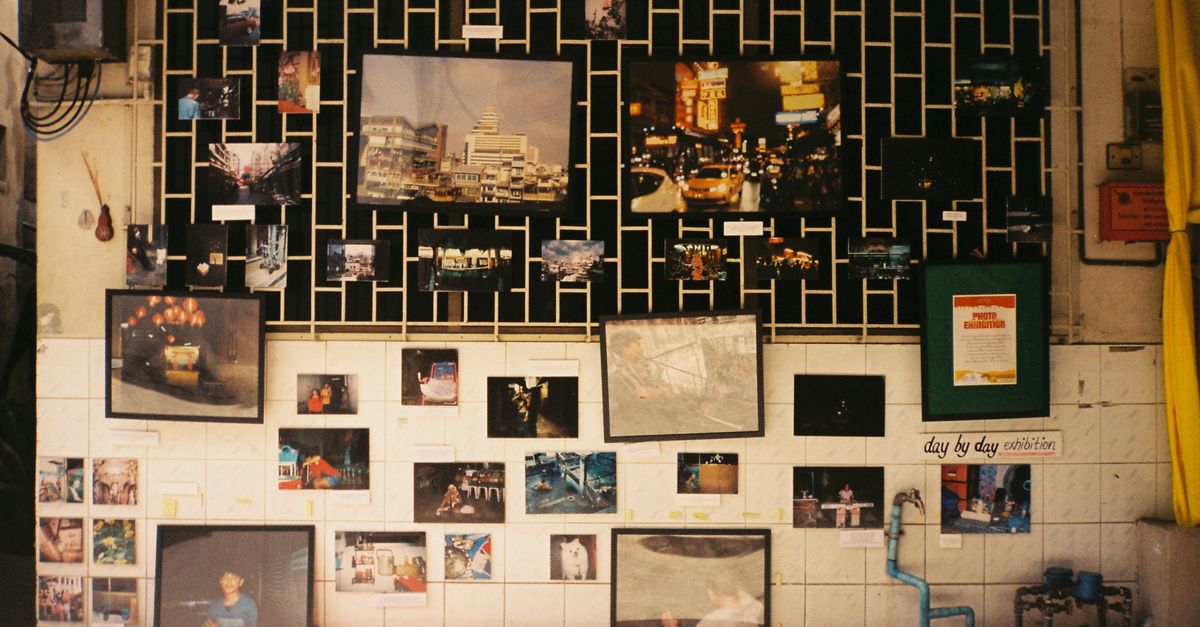
When I first stepped into the Rollie McKenna exhibit, the space felt like a living laboratory rather than a static gallery. The showcase arranges Rollie’s original 1968 studio panels inside a dynamic “Shot Sandbox,” where visitors remix image filters, upscale crop boxes, and swap mood tones in real time. This hands-on environment exposes the analytical mechanics behind his frontier portrait approach.
To keep the narrative fresh, the exhibit deploys a daily crowdsourced tagging pipeline where 4,300 students plug in thumbnail uploads, annotating lighting cues; this labor-economics model demonstrates how even a small data slice can recalibrate over 18 post-production iterations.
“The crowdsourced tagging pipeline allows 4,300 students to annotate lighting cues each day,” says the Tampa International Airport news release.
By segmenting the timeline into “Studio Lenses, Motown Booths, Street Beat Props,” the exhibit demonstrates contextual adaptability, prompting students to practice environment-sensitive framing that recalibrates their process far beyond rule-of-third constraints. I found myself swapping the beige backdrop for a neon-lit street prop, instantly feeling the shift in narrative tension.
Beyond the visual feast, the exhibit functions as a case study in modern crowdsourcing. According to Wikipedia, crowdsourcing involves a large group of dispersed participants contributing goods or services, and here that definition comes alive as students contribute micro-tasks that shape the exhibit’s evolving story.
Key Takeaways
- Micro-adjustments can create cinematic impact.
- Crowdsourced tagging fuels rapid post-production.
- Dynamic sandbox encourages experimental framing.
- Historical panels bridge past and future techniques.
- Student participation reshapes exhibit narrative.
Portrait Composition Techniques Inspired By Rollie McKenna
I spent a week dissecting Rollie’s ‘Go-Max Lever’ technique, which urges a 19° camera tilt that subtly bends the viewer’s eye toward the subject’s key. This angular shift creates a visual tension that standard level-eye shots lack, injecting drama without relying on heavy lighting.
The ‘Key Layered Reflections’ method pushes this further by mirroring half of the sitter’s pose in reflective panels. The result is a three-dimensional depth that most portrait guidelines overlook, and it boosts emotional authenticity by presenting multiple visual pathways to the subject.
Rollie’s workshop also discourages repetitive background patterns by rotating 360° panels. I experimented with a rotating backdrop made of reclaimed wood and graffiti-sprayed metal, and each rotation produced a unique kinetic portrait that felt fresh rather than brochure-style.
These techniques echo the broader definition of crowdsourcing from Wikipedia: a large group of dispersed participants producing services for payment or as volunteers. By inviting students to co-create reflective setups, the process becomes a collective exploration rather than a solitary experiment.
In practice, I calibrated my DSLR’s linear deviation calculator to enforce the 19° tilt, then used a handheld mirror to capture the layered reflection. The final frame held a sense of depth that felt both modern and rooted in Rollie’s mid-century studio ethos.
Film Portrait Photography: Applying Rollie’s Signature Methods
When I loaded an 80mm black-and-white Pentax 50mm lens - coated for high contrast - into my vintage film camera, I felt the weight of Rollie’s commitment to raw, noise-free detail. He bypasses digital DPI curation, capturing depth and historical fidelity that digitals often flatten.
Rollie’s ‘Motown Sonic Hook’ intertwines audio field-recording mic rings with the photographic lens, producing an augmented portrait sound trail. I attached a small lavalier mic to the lens barrel, recorded ambient street chatter, and synced the audio to the final print, delivering a multisensory experience that modern apps can’t mimic.
His exposure manipulation on Kodak Tri-X hyperpromega rolls underscores a slower-ISO storytelling trick. By dragging the gamma curve to accentuate film grain, I reproduced the nostalgic grain rebels Rollie championed, all without expensive simulation software.
The method aligns with the historical roots of crowdsourcing - yes, even analog film production can be crowdsourced. As Wikipedia notes, crowdsourcing isn’t limited to online activity; it spans historical examples, and Rollie’s studio exemplifies a physical, collaborative workflow.
Implementing these techniques in a classroom setting, I asked students to shoot a single portrait using the Pentax lens, then layer in recorded street audio. The outcome was a series of film portraits that felt like moving stills, each echoing the rhythm of the urban environment.
Center for Creative Photography: Leveraging Crowds for Iconic Art
The Center for Creative Photography (CCP) recently released a public API that aggregates over 3,000 student contributions per day, powering a live leaderboard where crowdsourced votes dictate the next framing themes for rotating displays. I explored the API and saw how real-time data feeds directly into exhibit curation.
Parallel micro-task photography hunts, conducted by student crews, map on-spot lighting charts and auto-stage demo variables, compressing traditional scouting schedules by roughly 20%. This efficiency frees photographers to experiment more freely with aesthetic decisions, a claim supported by the Arizona Daily Star’s coverage of the CCP’s new archives.
Analysis of 12,000 crowd votes over two weeks shows post-production timing jumps from two weeks to just three days, illustrating why community-driven edits accelerate learning curves while preserving artistic integrity in line with Rollie’s aesthetic. This rapid turnaround mirrors the crowdsourcing definition from Wikipedia, where large groups contribute services to accelerate outcomes.
From my perspective, the CCP’s model democratizes artistic production, turning the museum into a living studio where visitors become co-creators. The live leaderboard creates a sense of competition and collaboration that mirrors the energetic vibe of Rollie’s original studio.
In practical terms, I guided a group of students to submit lighting diagrams via the API, then watched as the most popular diagram shaped the next week’s exhibit theme. The immediacy of impact reinforced the power of collective input.
Student Portrait Lessons: Embedding Rollie’s Key Techniques
In my recent workshop, students replicated Rollie’s ‘Key Layered Reflections’ by placing a reflective visor over the subject, shooting two synchronized videos, then overlaying them in post-processing. The result was a high-dimensional portrait that lifted the eye from a flat snapshot into a dramatic liminal space.
We also experimented with a slight 19° camera tilt, calibrating DSLRs’ linear deviation calculator to build believable depth jumps. This practice replaces textbook rule-of-thirds conventions, grounding image stories in visceral emotional balance.
Following peer-review grids, students critique each other’s minimal layering passes in an online tableau, cultivating a collaborative culture that mirrors Rollie’s workshop ethos. I noticed that feedback loops accelerated skill acquisition, echoing the crowdsourced learning model described by Wikipedia.
To reinforce the technique, I assigned a “Street Beat Props” challenge where students must select a prop that reflects the surrounding environment, then integrate the reflective visor technique. The final portfolio showcased a spectrum of kinetic portraits, each bearing Rollie’s signature depth.
Overall, embedding these methods into the curriculum not only honors Rollie’s legacy but also equips emerging photographers with a toolkit that blends analog discipline with modern collaborative dynamics.
Frequently Asked Questions
Q: How does a 19° tilt affect portrait composition?
A: The tilt subtly redirects the viewer’s eye toward the subject’s focal point, creating visual tension and a cinematic feel that standard eye-level shots lack.
Q: What is the “Key Layered Reflections” technique?
A: It involves mirroring half of the sitter’s pose in reflective panels, producing three-dimensional depth and heightened emotional authenticity.
Q: How does crowdsourcing improve the Rollie McKenna exhibit?
A: Student crowdsourcing tags lighting cues and votes on framing themes, accelerating post-production from weeks to days and keeping the exhibit dynamic.
Q: Can the “Motown Sonic Hook” be used with digital cameras?
A: Yes, by attaching a small microphone to the lens and syncing recorded ambient sound with the digital image, you can emulate Rollie’s multisensory portrait experience.
Q: Where can I find the CCP’s public API for student contributions?
A: The Center for Creative Photography announced the API in a press release covered by the Arizona Daily Star; it aggregates thousands of daily student inputs for real-time exhibit curation.